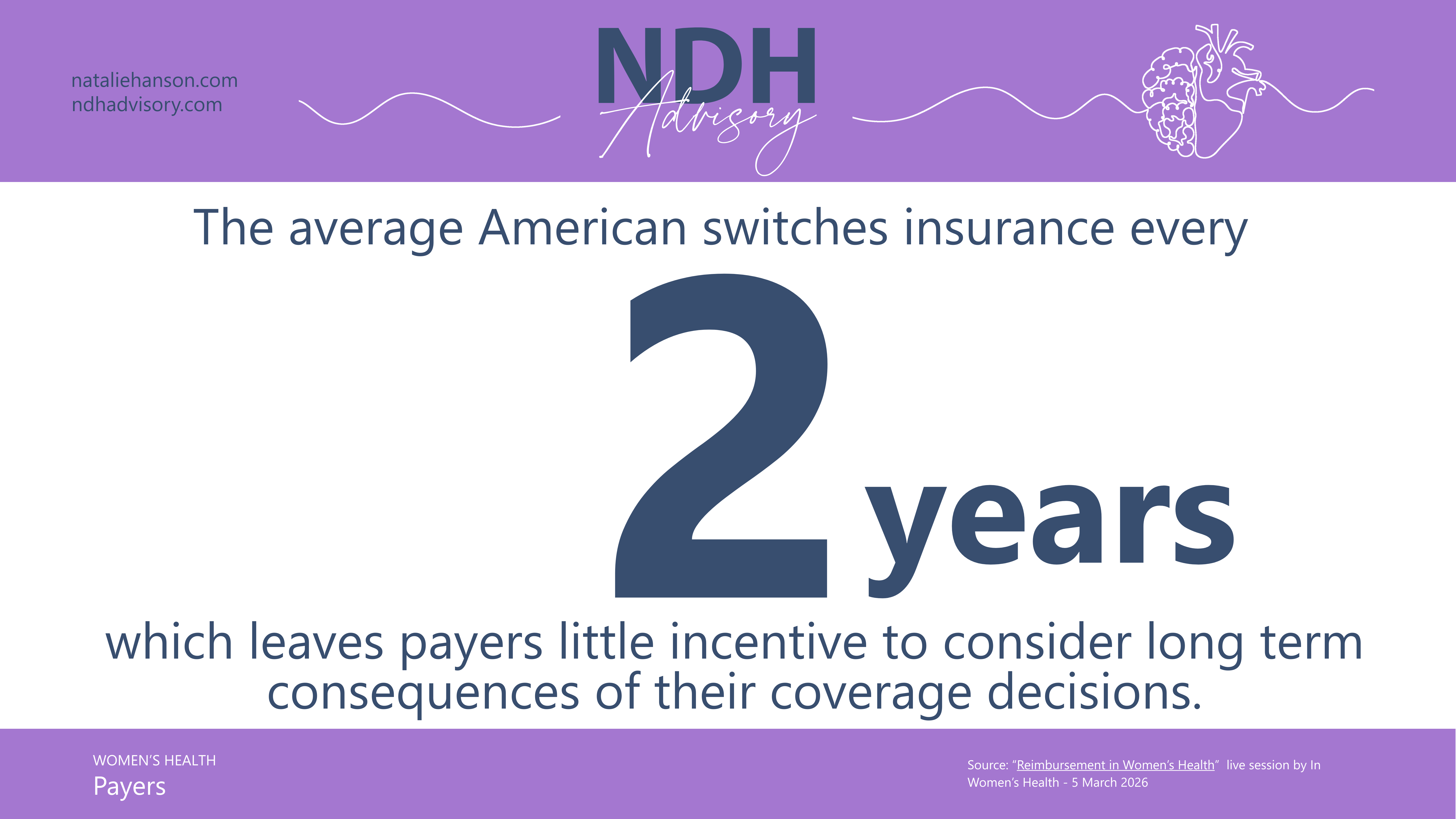
When insurers only expect to keep you for a year or two, your long term wellbeing becomes someone else’s problem – usually yours!
Insurance coverage often changes when people switch jobs, experience major life events, or see their income fluctuate. Around 23% of the population depends on Medicaid, so employment and income volatility are major drivers of coverage churn. The implications for patients include needing to find new care providers, gaps in coverage or care management, less use of preventive care, more hospitalizations (and higher costs), and the burden of navigating complex logistics around coverage, billing, and digital tools.
The lack of continuity gives insurers little incentive to consider the long-term implications of their coverage decisions. Care is disrupted, preventive services are underused, and moving between plans degrades the quality of data needed for long-term care management. As a result, insurers tend to focus on short-term ROI, driven partly by consumer behavior and partly by the complexity of managing care for populations with high turnover.
All of this produces worse outcomes for those who experience the most churn – often those on Medicaid. One payer may ultimately benefit from the long-term investments made by another, which discourages such investments, though there are some policy efforts underway to counterbalance these trends.
There is promising work emerging to give consumers centralized control of their own medical records, which would preserve continuity of medical records across payers. Recent research on 3 million Americans in commercial health plans found that while 1 in 5 members changed insurance each year, 1 in 3 returned to the same insurer within 5 years, suggesting it is, in fact, worth investing in long-term care. The question is whether payers, policymakers, and innovators will design around it or continue to let patients absorb the cost.
Leave a Reply