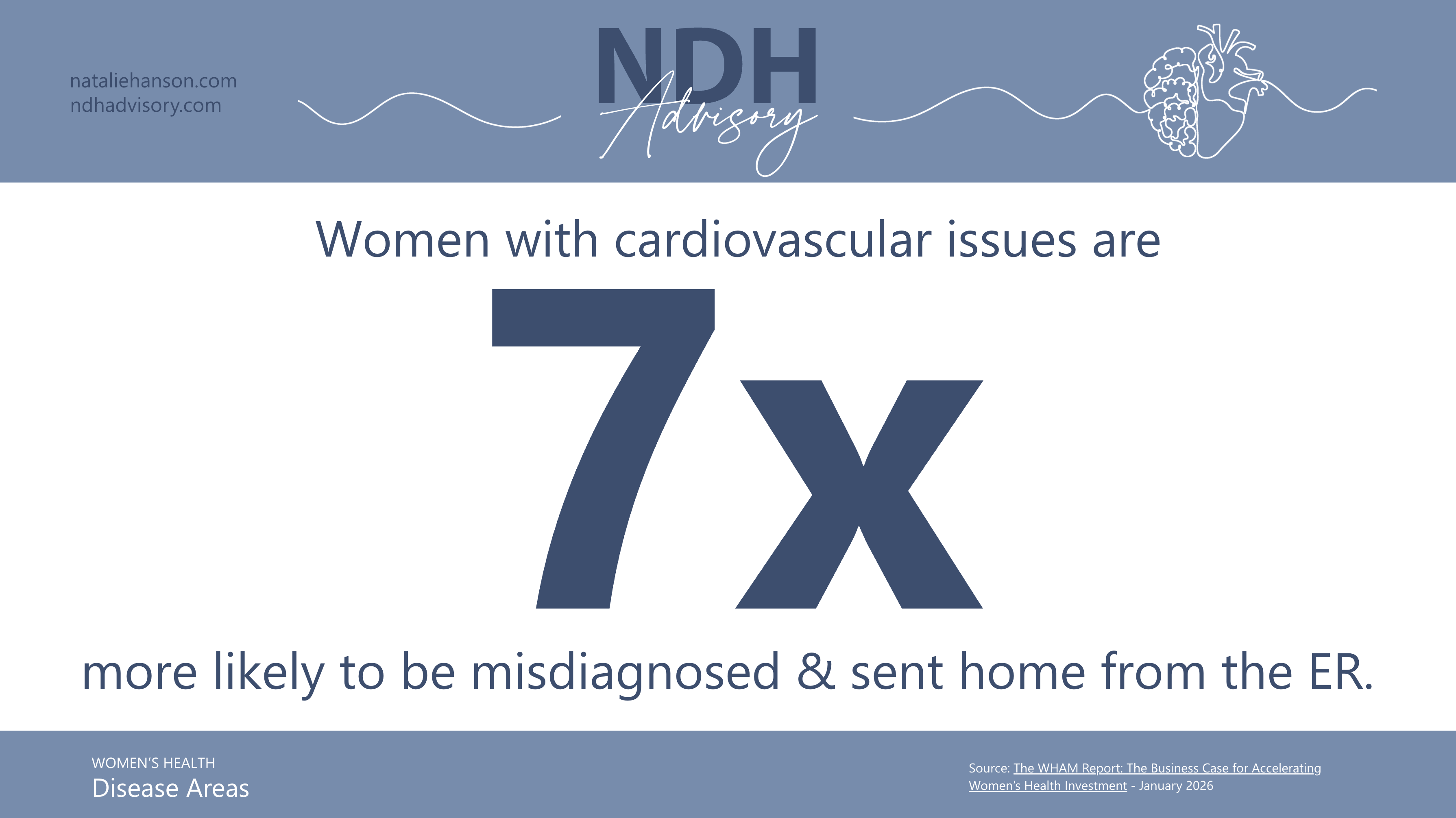
Gaslighting of women facing medical issues is a well-known problem. Well, women are increasingly aware, at least. But there are very few places more dangerous for women under 55 than the Emergency Room if they are having a heart attack.
Unique Symptoms
While both men and women may experience pressure in the chest and arms, women are more likely to experience dull pain in the back, neck, jaw or shoulders. They may even feel nauseous to the point of vomiting. Women may feel that “something is really wrong”, which appears as a sleep disturbance or anxiety.
High Discharge Rates
Women under 55 experiencing heart attacks are being discharged from the ER seven times more frequently – with no testing. As a result, women’s mortality following a heart attack is also higher than men’s – the American Heart Association reports 23% of women to 18% of men. A more recent study found even greater cause for concern – female mortality (for all causes) in the year following a heart attack was 33.2% vs 22.5% in men. Women are 2.5x less likely to receive a cardiology referral, we have higher in-hospital death rates, and we face a 20% increased risk of death within five years of the first severe myocardial infarction.
Male physicians underestimate stroke risk in women, so these factors are likely compounded by the lack of female cardiologists (only 15%).
Positive Momentum
As always with these posts, I hope to find some good news, and there is some:
- A recent analysis of cardiovascular trials from 2017–2023 found women now make up around 40–50% of participants; evidence shows that having a female principal investigator helps. There are also some all-female cardiovascular studies underway.
- While only 15% of cardiologists today are women, that number is on the rise, and there are efforts underway to make cardiology more inclusive.
- As I mentioned in my post earlier this week, there are new devices such as the smart bra from Bloomer Tech, a AI solution from CorDiFio which is focused on risk prediction and prevention in women, and the growing consumer wearables market.
If you are a woman under 55 and you feel that “something is really wrong,” do not minimize it, and do not let anyone else minimize it either. Learn the atypical symptoms, insist on appropriate testing, and if possible, bring someone who can advocate for you if you are dismissed. And for those in medicine and tech who read this – keep pushing for sex-specific research, more women in cardiology, and tools designed around women’s bodies – because our lives literally depend on it.
Leave a Reply